

 This month, the National Gallery will open its first exhibition dedicated to Neo-Impressionist art.
Radical Harmony: Helen Kröller-Müller’s Neo-Impressionists features radical works from the outstanding collection of German art collector Helene Kröller-Müller (1869‒1939). One of the first great women art patrons of the 20th century, Kröller-Müller, assembled what has been recognised as the world’s greatest and most comprehensive collection of Neo-Impressionist paintings. These include paintings by Anna Boch (1848‒1936), Jan Toorop (1858-1928), Théo van Rysselberghe (1862‒1926), Paul Signac (1863‒1935) and Georges Seurat (1859–1891).
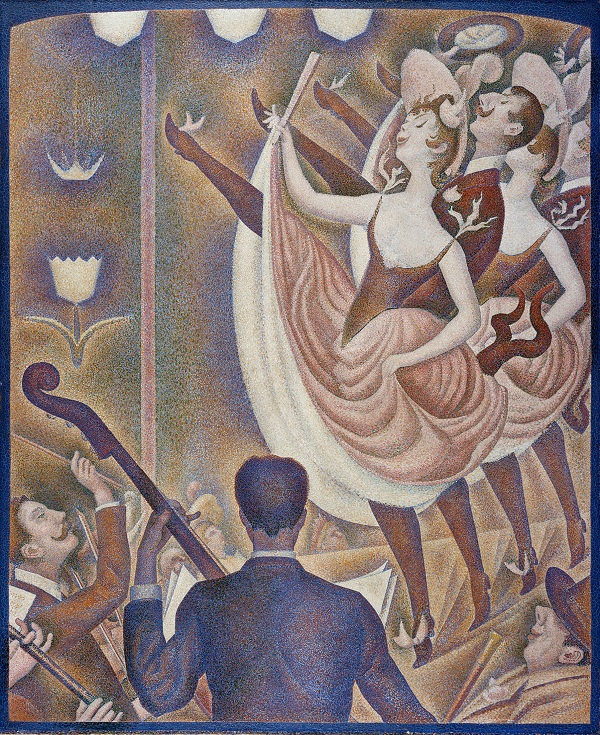
A highlight of the exhibition will be the first public display in the UK of Seurat’s painting of cancan dancers, ‘Le Chahut’ (1889‒90)
As well as being one of the first European women to put together a major art collection, Kröller-Müller was a pioneer in displaying modern works of art on white walls; in a museum designed by Belgian architect Henry van de Velde, who began his career as a Neo-Impressionist painter.
Her entire collection was eventually given to the Dutch government (under the condition that a museum be built to house it), along with her and her husband, Anton Kröller’s, large, forested country estate. Today it is the Kröller-Müller Museum and sculpture garden and Hoge Veluwe National Park, one of the largest national parks in the Netherlands.
Radical Harmony: Helene Kröller-Müller’s Neo-Impressionists will focus on how this style that emerged from 1886 heralded the end of Impressionism and became one of the very first pan-European art movements.
So radical was the style that some critics of the time saw it as signifying the death of painting, due to the methodical nature of a painting’s production in regular pointillist dots of pure colour, removing an artist’s individuality usually expressed through their brush strokes.
The radical nature of these works will be explored both in the way that they were painted, and in political underpinnings of the Neo-Impressionist movement with artists reacting against the industrial age with a desire to reshape society by painting the struggles faced by the working class.
At the same time, they also aimed to produce pictures that sought to transcend reality, creating radically simplified compositions that captured the essence of what they aimed to depict, attaining harmony through colour and geometry.
The exhibition will also feature works that Kröller-Müller did not collect herself. These will come from public and private collections worldwide including the Rijksmuseum, Amsterdam, Museum Barberini, Potsdam, and Tate, as well as pictures from the Gallery’s own Neo-Impressionist collection.
Radical Harmony: Helen Kröller-Müller’s Neo-Impressionists opens at the National Gallery on 13 September. For further information: nationalgallery.org.uk
Image: Georges Seurat, ‘Chahut’, 1889-90 © Collection Kröller-Müller Museum, Otterlo, the Netherlands. Photographer: Rik Klein Gotink
Smith Greenfield is an independent insurance broker specialising in insurance for exclusive lifestyles and collectors of valuable objects including: art insurance, antiques insurance, jewellery insurance, watch insurance, vintage car insurance, fine wine insurance and more. To discuss specialist insurance for your lifestyle, please contact our Premier Client Adviser, Imran Moideen: imran.moideen@smithgreenfield.co.uk